Author: Barb Stenross
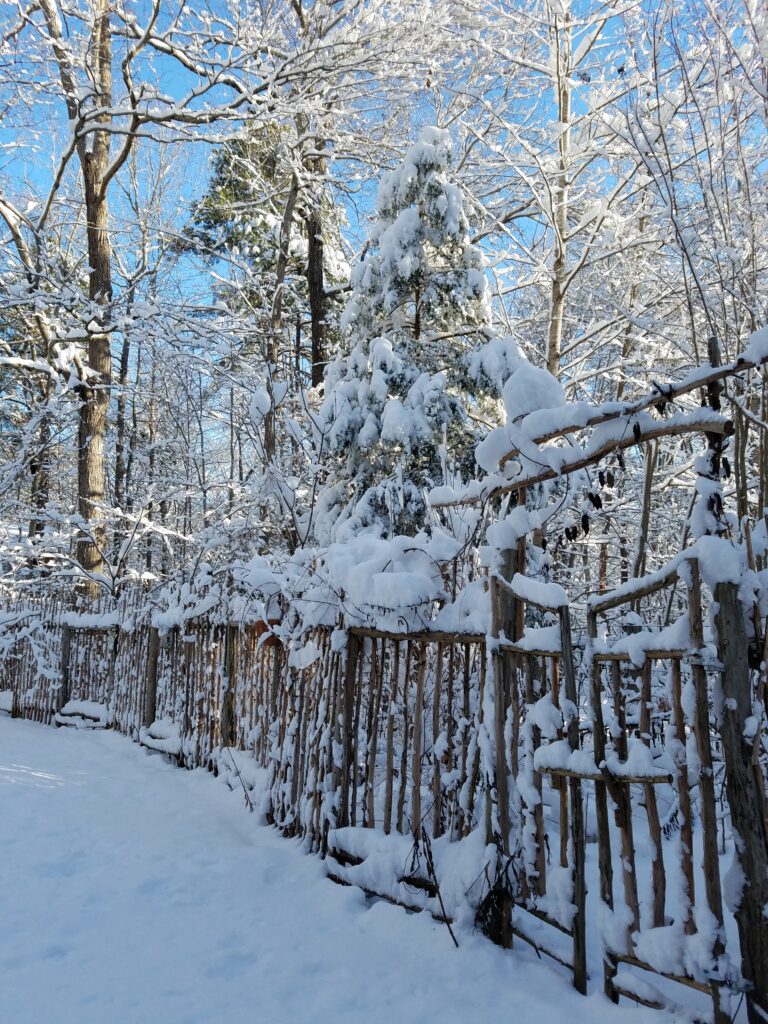
“She stood in the garden and looked about her. Against the gradually darkening sky, the branches of trees traced a pattern of twigs and leaves—a pattern of such intricacy and delicacy that those standing below might look up and wonder why the world can be so beautiful and yet break the heart.”
— Alexander McCall Smith, The Saturday Big Tent Wedding Party, p. 212
Among those who love birds, hearts are breaking. A recent study estimates that 1 out of 4 birds in North America has been lost since 1970, including a staggering loss of nearly 20% or 167 million birds that depend on Eastern forests. Loss of habitat, window strikes, roaming cats, pesticides—all of these have taken a toll on our birds. But standing in the garden and looking up, we can see a vital part of the solution: trees.
Many of the bird species in the Piedmont of North Carolina need trees. Not just for nesting materials and cover, but to host the lepidoptera (moths and butterflies) on whose larvae almost all species of land birds rely to feed their nestlings (for more information, see Doug Tallamy, Bringing Nature Home). As adults, these birds may eat seeds and spiders and berries, but as nestlings, they need the protein and fats provided by caterpillars—the bigger and juicier the better. And where do the great majority of these caterpillars hang out and eat? In the trees.
If we could train powerful binoculars high up in an oak tree canopy, we might be surprised at all the activity. More than 500 lepidoptera species munch down on the leaves of this magnificent invention—everything from dagger moths, underwings, hairstreaks, and inchworms, to 15 species of giant silk moths. See more.
This is why, if you have an oak tree in your yard or nearby, you are also likely to be hosting one of my favorite local birds, the Carolina Chickadee. Studies of this bird reveal that Chickadees must choose their nest sites carefully. To feed one clutch of eggs, they need upwards of 5000 (some say as many as 9000) caterpillars. This requires a feeding territory that has at least 70 percent native biomass. (Source). None of the Bradford pears and Crepe myrtles, butterfly bushes or Lenten roses, matter. As non-native plants that evolved elsewhere, these horticultural money-makers may be pretty, but they support no native lepidoptera. If a butterfly erred and deposited eggs on any of them, the larvae would go hungry and the chickadee, go without.
Every native plant feeds something. For example, very few faunal species can tolerate the toxins in plants of the milkweed family, but we all know that the Monarch butterfly has evolved a workaround and specifically needs this genus to survive. Other plants are more bio-available to a variety of fauna. In his research on the web of life (Bringing Nature Home), entomologist Doug Tallamy counted the lepidoptera that feed on trees and shrubs in the eastern United States. He found that species vary widely in how many lepidoptera—hence, birds—they can support. In one example, Spicebush supports 11 different butterfly larvae, and, along with sassafras, is necessary to the survival of the spicebush swallowtail. Other flora can feed more widely. And luckily, some plants like oaks act as generalists, feeding the largest number of insects, with the greatest advantage to birds. From the viewpoint of ecological resilience, the best strategy is to protect and promote the greatest variety of all floral species—that is, to protect and enhance ecological biodiversity—to have the best chance for climate resilience and to conserve the most fauna as well. Yet Tallamy also found that some plant species are heavy hitters and should be go-to plants because they can make the most difference. He calls these plants that support a much larger than average number of lepidoptera “Keystone Species.”
The main keystone genus in our Piedmont area of North Carolina is Quercus, oak. Although prior to European settlement and fire suppression, much of the Piedmont may have been prairie grassland (some parts with trees, other parts without), it has most recently functioned as an oak-hickory forest community. This community reverberates with its own special understory of woody and herbaceous plants and grasses. It also likely has its own mycorrhizal network, of which herbalist Stephen Buhner argues trees are the fruiting bodies (Buhner, Plant Intelligence). Those of us who love Piedmont nature fall in love with this whole community: from the early transitional sweetgum to the sourwood, dogwood, persimmon, wild cherry, blueberry, coral berry, sedges, goldenrods, pussytoes, lyre leaf sage and native grasses that form the web of life within it. I even love the smell of the earth from which these species arise. This is the community the Carolina chickadee—and the downy woodpecker, goldfinch, and white-breasted nuthatch—need, and it revolves around that keystone oak, and its major companion, the hickory.
If you have a yard, do you have an oak? If not, please plant one. If you are an old coot like me, you may not live to see that oak in its full glory, but you can imagine it, you can watch and care for it, and you will have made a difference for the future. If you rent but have a yard, you may consider following Hope Jahren’s plea in the epilogue to her wonderful memoir, Lab Girl (p. 280). “Plant a tree and see if your landlord notices. If he does, insist to him that it has always been there. Throw in a bit about how exceptional he is for caring enough about the environment to have put it there. If he takes the bait, go plant another one. Baffle some chicken wire at its base and string a cheesy bird house around its tiny trunk to make it look permanent, then move out and hope for the best.”
Planting an oak is ideal but planting almost any native tree will earn you the title Environmentalist in my book. If you lack the space for an oak, hickory, or maple, consider a river birch. It is medium in height, grows quickly, and scores high on the list of number of lepidoptera (and hence, birds) supported (see our Keystone Plants spreadsheet). Or a redbud—a good understory tree that looks good in all seasons and has respectable lepidoptera counts. Or if you need something that provides screening, options include Carolina cherry laurel, Eastern red cedar, or even Yaupon holly—perhaps not technically a tree, but an evergreen woody that can grow quite large if you don’t prune it. As a selling point for Yaupon holly, not only do all native hollies support many lepidoptera, but I recently saw a flock of cedar waxwings feeding on the berries of the tree-sized shrubs at the southern edge of Spring Valley Lake in Carrboro. Yaupon is also deer resistant! For other suggestions on tree selection, see the NHAS-curated list of recommended plants for the Piedmont here.
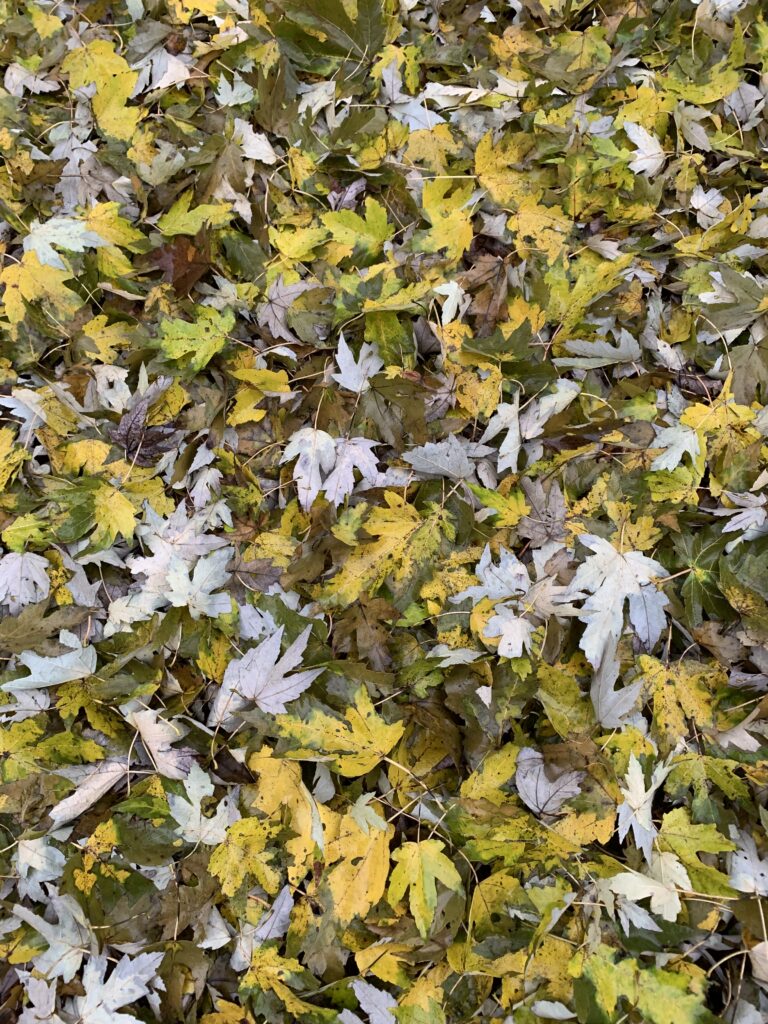
I would be remiss at this point if I left out the contribution to lepidoptera and avian survival of trees’ detritus—leaves. Seen by many homeowners as something to get rid of, shed leaves are just what a tree needs to have under it, and at about the same level—neither piled high nor blown away.
If you follow the example of the forest in leaving the leaves, the communities of microorganisms in the soil will decompose the leaves, enriching the soil and contributing to plant health. Moreover, before they decompose, the leaves will provide cover for overwintering Luna moths, lightning bugs, ladybugs, and many invertebrate species. Leaves are so valuable that in one of his lectures at the North Carolina Botanical Gardens, Doug Tallamy suggested that a homeowner with too many leaves simply does not have enough garden beds and would do well to reduce some turf. This can provide more biodiversity and give space for adding some of the native plants on which North Carolina’s many pollen-specialist bees depend. See more here. For more information about why leaves deserve our respect, see two NHAS blogs, Leave the Leaves and Littering with Leaves.
Of course, trees are important for more than conserving lepidoptera and birds. As a quick overview, here are a few. Trees:
- capture and sequester carbon, a gain in our struggle against our climate emergency (with the biggest trees disproportionately capturing the most carbon);
- take water from the soil and release it into the air through their leaves, providing natural air conditioning and reducing energy use and reliance on fossil fuels;
- combat flooding by slowing rainwater and spreading out a rain event;
- purify air by absorbing odors and pollutants from nearby roadways and smokestacks (in fact, trees have been found to actively “eat” pollution such as ozone);
- foster feelings of well-being, with people who live near trees reporting feeling healthier and less stressed;
- promote physical health (children in greener neighborhoods are less likely to suffer from asthma; adults live longer after surgery in greener areas);
- increase property value (e.g., homes in Portland with more street trees sold faster and for almost $9,000 more).
So, let’s say you are ready to plant a tree. Late fall/winter is the ideal time. Where do you start?
First, select location carefully. Be sure to allow enough space. It is easy to underestimate the size of a tree at maturity. For some guides on tree planting and tree care, see this guide. While you are in planning/planting mode, consider whether you have room for two (or more) trees since trees shelter and protect each other from high winds. And call the utility company if you are unclear about the location of underground infrastructure.
If you plant the tree yourself, dig the hole no deeper than necessary to accommodate the root ball, but at least twice as wide. Water well and be sure the tree gets an inch of water per week from that point forward. Newly planted trees may need protection from deer until branches are above the browse line and protection from buck rub until over 3” in diameter (see our Deer Wars blog for more info). If you prefer expert help, consult New Hope Audubon Society’s list of recommended landscaping professionals. If you’re doing the work yourself, see our recommended nurseries. Always ask whether a tree has been treated with systemic pesticides (e.g., neonicotinoids) and avoid those. Finally, avoid over-mulching trees with “volcano mulches.” Simply leaving the leaves avoids this problem.
As Catherine Bollinger reminds us in a recent blog, although it is nice to have a garden bed focused on plants for pollinators, our entire yard—including its trees!—is the pollinator garden. It is also, thereby, a bird sanctuary. When we look up and see that intricate pattern of twigs and leaves, it can enliven our hearts with love and hope.
Photos by author except as noted.