

/ Conservation / Species of Local Concern / Chimney Swifts
Chimney Swifts
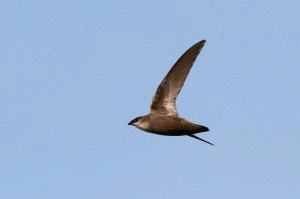
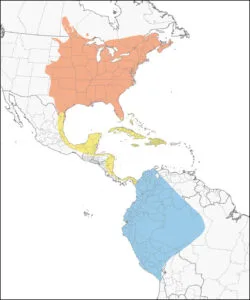
Swifts historically nested and roosted in hollow trees. As North America was colonized and the larger trees were cut down, swifts started to use chimneys. There are four swift species in North America; the most common east of the Mississippi River is the Chimney Swift. Swifts migrate to and from the Amazon basin in South America.
They arrive in North America in late March and start nesting. Only one pair nest in a chimney regardless of the size of the chimney. The young fledge about 30 days after hatching and begin flying all day immediately. Swifts eat 1/3 of their body weight in insects every day (12,000 mosquitoes, termites, flies, and other insects each day). Once breeding season is over, they tend to flock together and gather in larger chimneys to roost. Staying in large groups helps them to maintain their body temperature during the fall. They typically have left our area migrating to South America by mid- October. Swift numbers have been declining almost 3% per year. Swifts are protected under the Migratory Bird Treaty Act of 1916.
Ways to help swifts
- Keep your chimney open or uncap your chimney if it is capped. Newer chimneys with metal liners are too slick for swifts to use so they can be capped. Swifts prefer older chimneys with brick linings.
- Be a Citizen Scientist – report nesting and roosting sites to your local Audubon chapter. Adopt a chimney, counting swifts at several locations around Durham, Orange and Chatham Counties.
- Build a Chimney Swift tower to provide more nesting habitat for swifts.
- Save Roost Towers – Schools and industrial buildings are replacing older chimneys. Join us in meeting with administrators and managers to influence plans before chimneys are removed. Contact New Hope Bird Alliance if you know of a roosting tower that may have been removed or capped.
References: http://www.chimneyswifts.org
Chimney Swifts In Durham And Chapel Hill
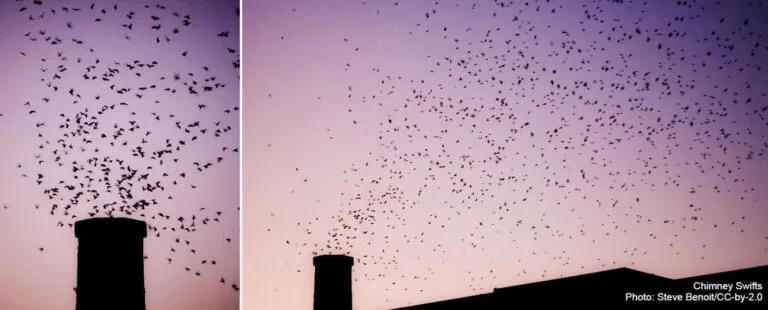
From mid-September to early-October, migrating Chimney Swifts move through central North Carolina on their way to their wintering grounds in central South America. While en route, they spread out over the countryside to feed during the daytime and then gather in large numbers for roosting at night. True to their name, they roost communally in large numbers in smokestacks and chimneys.
In the fall, they flock and migrate as far south as northern Chile. During migration, flocks of Swifts swirl in tornado like formations and funnel into chimneys to roost for the night. They are usually gone from our area by mid-October.
Local roosts in our area may have thousands of swifts on any given night. For example, an estimated 8,500 swifts gathered in a chimney on Trinity Avenue in Durham on September 23, 2020. Swifts will often move to different locations and chimneys each night. If you would like to watch the spectacle of thousands of swifts swirling through the air as they gather in the evening. NHBA holds several Chimney Swift night out events each fall: Check the NHBA Calendar in September for group events.
Here are some observation location descriptions and a map:
Durham
- Old North Durham Park: Swifts can be seen entering the chimney on Trosa’s dormitory at North and Geer Streets.
- Pearl Mill Flats Apartments, 807 W. Trinity Ave, Durham. The best view is from the end of Minerva Avenue behind 600 N. Duke Street, behind the apartment complex. This is a very large tower which can be seen from a number of locations.
- The roof at The Durham Hotel, 315 E. Chapel Hill St, Durham, is a terrific vantage point for several downtown Durham chimneys. Access is first-come, first-served. The roof is wheelchair-accessible.
- NC Cooperative Extension Office – 721 Foster Street, Durham – the chimney is on the backside of the office building and can be best viewed from Washington Street.
Chapel Hill
- Davie Poplar Historic tree on UNC Campus – 204 E. Cameron Avenue, UNC Campus, Chapel Hill. This historic tree is located on the campus grounds between the Old Well and McCorkle Place. This is the only known tree roost in NC. Swifts can be seen in mass circling over the grounds before entering the tree.
- Porthole Alley between Ackland Art Museum and Top of the Hill off of South Columbia Street. There are several chimneys on the backs of buildings along the alley that are used by the swifts.
Pittsboro
- There are several chimneys near the intersection of Business 64 and Highway 15-501 (Sanford Road) in downtown Pittsboro. Swifts have been seen going into a chimney near the ABC store and the Pittsboro United Methodist Church.

Love Wildlife? Give Back.
New Hope Bird Alliance depends on the community to help fund meetings, educational resources, and conservation efforts. Make a donation* to help protect North Carolina’s wildlife for years to come. Thank you for your support!
*Donations are tax-deductible to the full extent provided by law.
Love Wildlife? Give Back.
New Hope Bird Alliance depends on the community to help fund meetings, educational resources, and conservation efforts. Make a donation* to help protect North Carolina’s wildlife for years to come. Thank you for your support!
*Donations are tax-deductible to the full extent provided by law.