
New Hope Bird Alliance advocates for birds and other wildlife in Chatham, Durham, and Orange Counties in North Carolina. By engaging at the local and state levels, our membership aims to protect vital natural resources, including the native habitats that make our region unique. These resources include waterways, green spaces, forests, and rural buffers, as well as the human landscapes that play a role in supporting wildlife.
New Hope Bird Alliance is a non-partisan, not-for-profit organization. As a local chapter of the National Audubon Society, we are a recognized voice for wildlife and for the people who appreciate the outdoors. Through collective Calls to Action, our membership aims to influence environmental decisions within our tri-county area.
Take Action
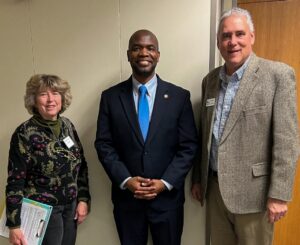
State Advocacy: Every year under the guidance of Audubon North Carolina, NHBA along with other chapters participate in Advocacy Day at the North Carolina State Legislature. This is a rewarding experience and has led to legislative wins for birds.
Participate in Advocacy Day. This annual spring event brings chapter members from across the state to advocate for birds and environmental issues at the Raleigh legislature. Led by Audubon North Carolina, Advocacy Day gives members the opportunity to learn about 3-4 specific current issues to discuss with their legislators. Participants are given training, talking points, and a scheduled meeting with legislators – all you have to do is bring your voice and enthusiasm!
Local Advocacy:
Birds can’t talk, but you can! When legislative policy or development threatens birds and the environment, use your voice to speak up for birds. You can also help bring local issues to our attention; NHBA regularly sends comments on behalf of our membership.
- Attend local government meetings and sign up for their newsletters.
- Contact your local representatives and tell them about issues you (a constituent) care about. They represent you!
- Volunteer with our Conservation Committee to join local advocacy efforts.
- Sign up for Action Alerts with Audubon North Carolina
Current Actions:
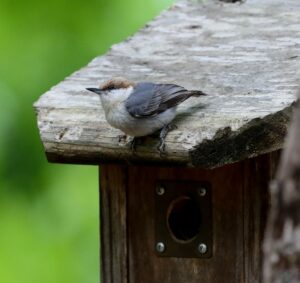 Nest Boxes for Cavity Nesters: For many years, NHBA has sold Bluebird, Nuthatch and Eastern Screech-owl nest boxes. Many of our cavity nesting birds – Eastern Bluebirds, Titmice, Chickadees, House Wren, and Eastern Screech-owls do not create their own cavities and rely on unused woodpecker cavities or cavities which develop in older trees. People tend to cut down dead trees in their yards and clear cutting of our larger trees has led to a lack of trees with potential nesting cavities for these birds. At one point in the 1970s the Eastern Bluebird populations had dramatically decreased due to a lack of nesting locations. Several advocates started building and selling the nest boxes which has helped all the cavity nester populations.
White-breasted and Brown-headed Nuthatches have the capability to build their own cavities; however, their populations have also been impacted by the lack of available tree cavities. NHBA sells Brown-headed Nuthatch nest boxes which have a smaller entrance than the Bluebird nest boxes. This excludes Bluebirds which can out compete the Nuthatches for a nest box.
Boxes are made from pine by a local group. NHBA volunteers brand the boxes with our logo and deliver them locally (within our 3 county area). Including a nest box in your yard is one way to help our many cavity nesters and support our conservation efforts.
Go to our Species of Local Concern to see how NHBA has also been providing nest boxes for other birds such as Prothonotary Warblers and Purple Martins.
Development Ordinances: The health and well-being of all citizens, no matter where they live, depend on a healthy environment. A healthy environment in turn protects populations of birds and wildlife that are declining in a time of accelerated climate change. NHBA has been focused on improving local development ordinances for people and wildlife.
Chapel Hill: Land Use Management Ordinance: In July, 2026, Chapel Hill released a draft version of their Land Use Management Ordinance (LUMO). Information on the LUMO can be found here.
NHBA has concerns that this draft LUMO primarily addresses denser development without evaluating the impact of that increased density on stormwater (flooding) and negative climate and quality-of-life impacts (e.g., tree canopy loss, heat island effects from reduced permeable surfaces). NHBA encourages Chapel Hill to develop a more comprehensive approach that merges development, stormwater management, and greenway and green space protection to create a more complete community. Potential comments to submit to Council ([email protected]) can be found here.
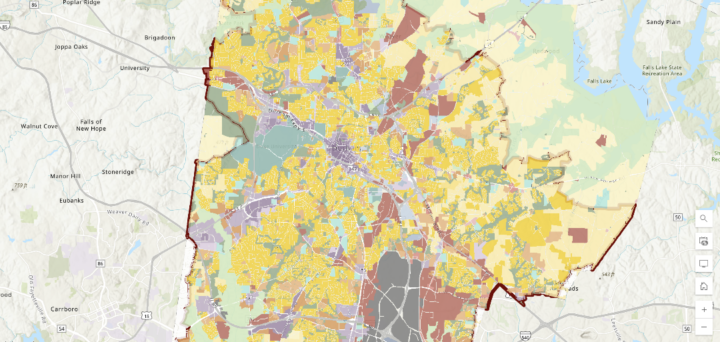
The proposed LUMO would allow denser residential and commercial development on the collector roads identified in this town map as well as within 1/4 mile of a green way entrance (to be determined and identified by staff). This map shows the proposed collector and arterial roads that would be targeted for increased density.
 Durham: Help Shape Future Development: Currently on HOLD! Durham is drafting a new Uniform Development Ordinance (UDO) — zoning and land use regulations that will govern the development of land in Durham for years to come. NHBA has been providing and comments on the draft UDO modules. In the fall of 2025, NHBA drafted a comprehensive letter critiquing and amending Durham’s proposed UDO language to make sure the public health aspects of clean air, clean water, tree coverage, and access to nature are not lost in the rush to develop more housing, most of which is not affordable to the lower-income citizens of Durham. A number of community organizations and non-profits have joined NHBA in this effort and co-signed the letter. A revised draft of the UDO should be provided to the public in early 2026.
The ENGAGE Durham webpage highlights other engagement opportunities to meet and share feedback on the new UDO.
Information on the status of development ordinances in other municipalities or counties in NHBA Area:
Chatham County has adopted its new UDO. Due to Legislative Issues the new UDO will not become effective until June 1, 2027. Thanks to NHBA and other commentors, the final version of Chatham County’s UDO update includes strong native tree policies, including guidelines for “tree save areas” and a requirement that all new canopy trees be native species (in addition to a 75 percent requirement for all other plantings). Developers are also provided incentives for preserving large trees that meet certain criteria and are outside of required tree save areas. The final UDO incorporates greater species diversity requirements for new plantings as well.
Orange County is in the process of updating their Land Use Plan although adoption is behind schedule. You can sign up for information and email updates.
Pittsboro is updating parts of its UDO.